Trenchingin East Texas
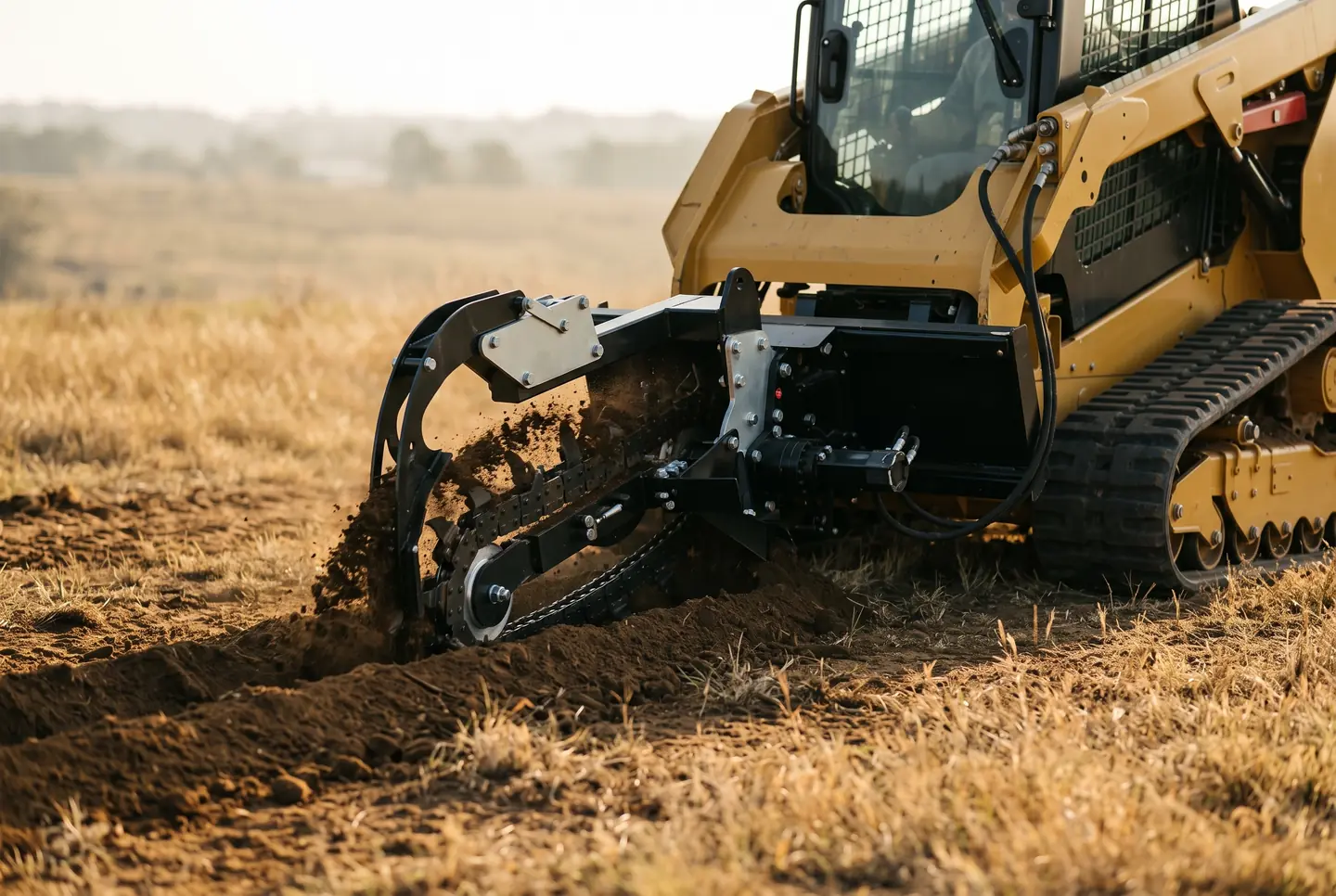
A trenching service in East Texas earns its keep when you need a line in the ground without tearing up the whole place. Our trencher cuts a narrow, straight channel at a depth you set, for water lines, electrical conduit, fiber, irrigation, French drains, and underground gas.
Lines we put in the ground
A trench is just the fastest way to get a line where it needs to go without opening up the whole yard. We cut for water lines, electrical conduit, fiber and low-voltage, irrigation, French drains and yard drainage, and underground propane and gas.
- Water lines to a house, barn, tank, or trough
- Electrical conduit and low-voltage runs
- Fiber and internet drops across a property
- Irrigation mains and zones
- French drains and surface drainage
- Underground propane and gas lines
Why a trencher beats an excavator on a narrow run
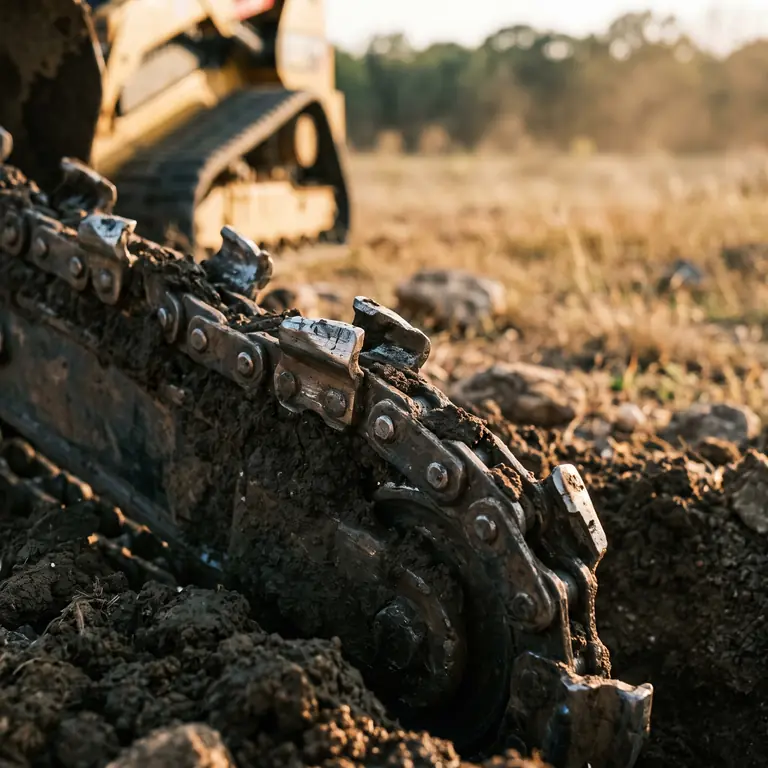
For a long, narrow line, a dedicated trencher wins. An excavator bucket is wide, so it moves a lot more dirt than the line needs, leaves a rough-walled hole, and gives you a big pile to put back. A trencher chain cuts a narrow, straight slot at an even depth and windrows the spoil in a neat ridge right beside the cut.
That means less ground torn up, less to backfill, cleaner walls for your pipe or conduit to sit in, and a straighter line. On most water, electrical, and irrigation runs it is faster and tidier from start to finish.
Depth and width, set to the job
Depth is adjustable and we set it to what the line calls for. Most water, electrical, and irrigation runs sit in a range we reach in a single pass. Width follows the chain. Tell us what is going in the ground and how deep it needs to be, and we cut to it.
Typical depths for East Texas ground
Here is a starting point for where common lines usually sit. These are typical depths, not code. County rules and utility requirements vary, so verify yours before the trencher runs.
Call 811 first. Every time.
Before any trench, you call 811. It is free, it is the law in Texas, and it gets the public utilities located and marked so nobody cuts a gas or power line. Make the call a few days ahead. We work to the marks and stay clear of them.
Anything private on your property, like a water line you ran to a tank yourself or an old electric feed to a shop, point it out to us. Those do not show up on a public locate, and you know where they are better than anyone.
French drains and drainage
When the problem is water sitting where it should not, a French drain moves it. We cut the trench on a fall so water runs to daylight or to where you want it to go, and set it up to carry the pipe and gravel. If you have a low spot that stays wet or a house that sheds water toward the wrong corner, that is a trenching job worth doing right.
Other work we do
Post Hole Drilling
Fence lines, gates, decks, pole barns, sign posts. Clean holes at the diameter and depth you need.
Read moreGrading & Leveling
Building pads, low spot fills, drainage grade, arena and pen leveling.
Read moreGravel Driveways
New drives, regrading, washout and pothole repair, crowning for drainage.
Read moreTell us about the job.
Send the details and we will get you a straight quote. Post holes, a trench, a pad, a driveway, or all of it in one trip.